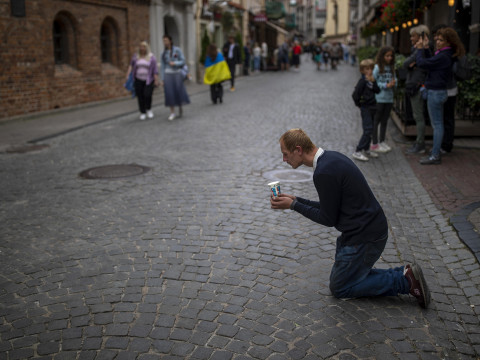


Context: Host of the program “Vesti ne molchat” Sviataslau Mikhailau claimed that Poland had supposedly fallen into serious economic trouble: the country is hosting about 1 million Ukrainians, 70% of whom he says are not working, while Poland’s military spending in 2024 amounted to 4.2% of GDP, or roughly $32 billion.
On November 19, 2025, Sviataslau Mikhailau, host of the Vitebsk News YouTube channel, spoke about what he called a rapid spike in food prices next door: “Poland is seeing a rise in grocery prices. Over the past week, the cost of a market basket has increased 3%. In just one week!”
The state-run news agency BelTA reported the same thing on November 10: “According to an analysis by PanParagon experts, shoppers in Poland now pay an average of 100.50 zlotys (more than $27) for basic food items. That means grocery prices rose 3% in a week. The pace of growth is also accelerating — a week earlier it was 0.7%.”
PanParagon is an app used for storing receipts and tracking discounts. Users across Poland upload about 1.5 million receipts to the app every month. The platform analyzes those receipts to track changes in food prices, inflation, and consumer trends. It focuses primarily on 14 staple items, including potatoes, sugar, bananas, chicken breast, milk, apples, carrots, tomatoes, butter, and peppers.
According to the app, in late October and early November 2025, the cost of a consumer basket did rise 3% and totaled roughly 100 zlotys (about $27). But the host left out the fact that prices in Poland don’t rise nonstop — food costs can also fall. Just a week after the 3% increase, prices pulled back 1% as 10 of the 14 tracked items became cheaper. In May 2025, this same set of goods actually dropped 3% in a single week — at that time the basket was more expensive than it is now, nearly 108 zlotys (about $29).
Short-term swings in food prices are normal. They’re especially common for highly volatile items, where seasonal factors or store promotions can trigger quick price jumps.
Annual changes tell a clearer story. According to Poland’s Central Statistical Office, food prices there rose nearly 3.5% over the past year. In Belarus, the increase over the same period was 9.8%. We saw the same propaganda tactic when we exposed a manipulation by CTV — a host highlighted rising prices in Latvia but failed to mention that food costs in Belarus are climbing even faster.
The outlook for Poland’s economy is reflected in the European Commission’s forecast: projected GDP growth for 2026 has been revised upward from 3% to 3.5%. Analysts also expect inflation to continue slowing. As a result, Poland now has a strong chance of becoming the second-fastest-growing economy in the EU, trailing only Malta.